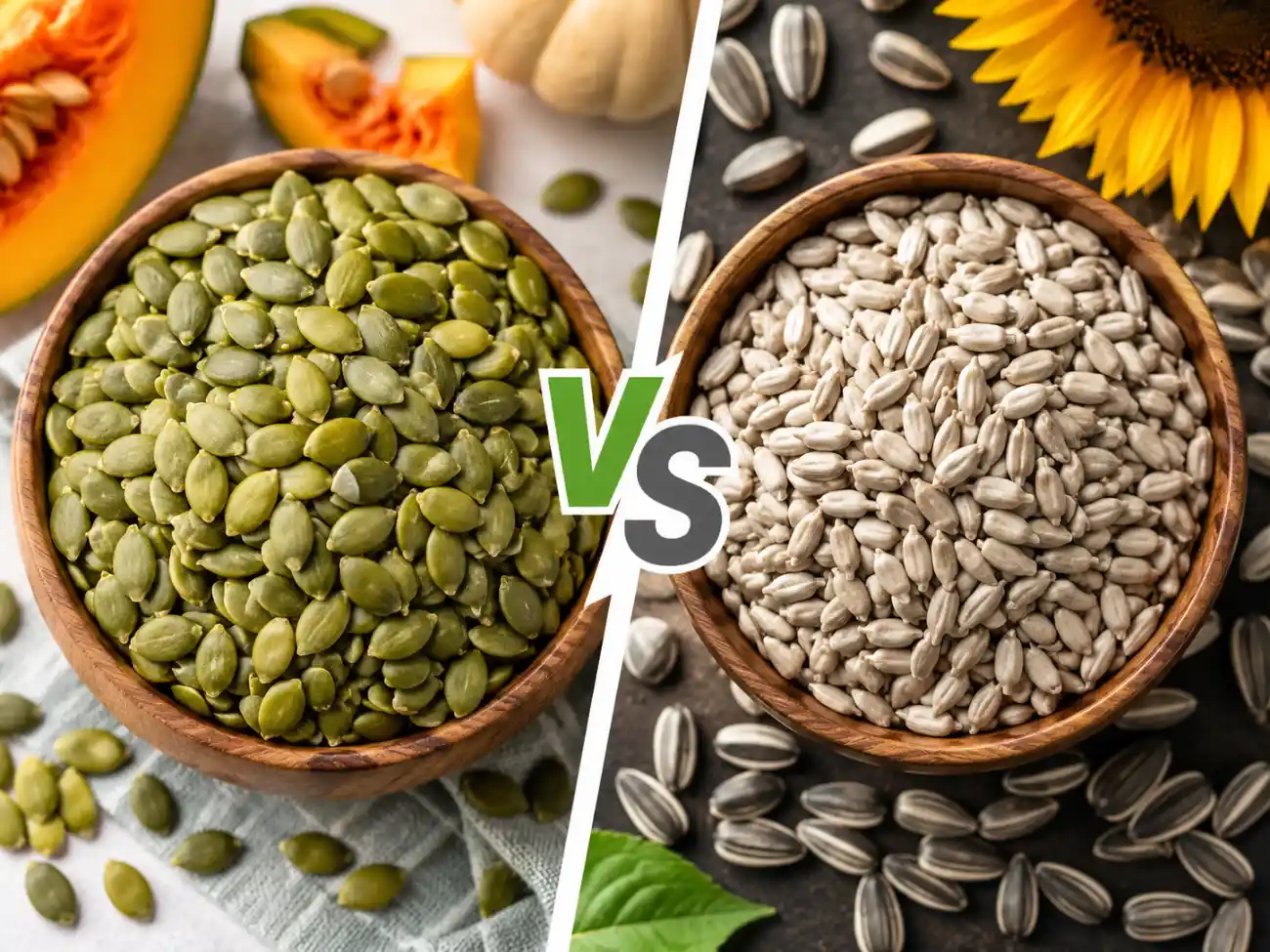
If you’re looking for a healthy snack that’s rich in nutrients, you’ve probably wondered about Pumpkin Seeds vs Sunflower Seeds. I compared both to see which one offers more fiber, protein, and magnesium—the three nutrients many people want more of in their daily diet.
Both seeds are nutritious and can be part of a balanced eating plan. However, after looking at their nutritional value side by side, pumpkin seeds stand out in several important areas. The comparison below explains why.
Pumpkin Seeds vs Sunflower Seeds: Comparing the Nutrition Facts
The values below are based on a 1-ounce (28 g) serving.
| Nutrient | Whole Pumpkin Seeds (With Shell) | Hulled Pumpkin Seeds | Hulled Sunflower Seeds |
|---|---|---|---|
| Calories | 126 | 163 | 165 |
| Protein | 5 g | 8 g | 5.5 g |
| Total Fat | 5.5 g | 14 g | 14 g |
| Carbohydrates | 15 g | 4 g | 6.8 g |
| Dietary Fiber | 5 g | 1.8 g | 3 g |
| Magnesium | 74 mg | 156 mg | 36.6 mg |
| Calcium | 15 mg | 14.7 mg | 20 mg |
| Zinc | 3 mg | 2 mg | 1.5 mg |
| Iron | 1 mg | 2.3 mg | 1 mg |
Note: Pumpkin seeds can be eaten with or without their shell. Sunflower seeds should only be eaten after removing the shell.
Why I Recommend Pumpkin Seeds
After comparing the nutrition facts, pumpkin seeds come out ahead in the nutrients that many people try to increase in their diet.
Here’s why I would recommend them:
- Higher protein than sunflower seeds when eaten without the shell.
- Much higher magnesium in both hulled and whole forms.
- More fiber when eaten with the shell.
- Good source of zinc and iron.
- Easy to add to both sweet and savory meals.
Sunflower seeds are still nutritious, but pumpkin seeds provide a stronger overall nutrient profile.
Winner for Fiber
If increasing fiber is your goal, whole pumpkin seeds (with the shell) are the better choice.
Fiber per 1-ounce serving
| Seed | Fiber |
|---|---|
| Whole Pumpkin Seeds | 5 g |
| Hulled Sunflower Seeds | 3 g |
| Hulled Pumpkin Seeds | 1.8 g |
The shell contributes a significant amount of fiber, which is why whole pumpkin seeds contain much more than hulled pumpkin seeds.
Dietary fiber supports digestive health, helps you feel full for longer, supports a healthy gut microbiome, and can help maintain healthy cholesterol and blood sugar levels.
Recommendation: Choose whole pumpkin seeds if you’re trying to eat more fiber.
Pumpkin Seeds vs Sunflower Seeds: Winner for Protein
For people looking to increase plant-based protein, hulled pumpkin seeds are the clear winner.
| Seed | Protein |
|---|---|
| Hulled Pumpkin Seeds | 8 g |
| Hulled Sunflower Seeds | 5.5 g |
| Whole Pumpkin Seeds | 5 g |
Protein plays an important role in building and repairing body tissues, maintaining muscle mass, supporting exercise recovery, and helping you stay satisfied between meals.
Recommendation: Hulled pumpkin seeds are the better option for higher protein intake.
Winner for Magnesium
Magnesium is one of the biggest differences between these two seeds.
| Seed | Magnesium |
|---|---|
| Hulled Pumpkin Seeds | 156 mg |
| Whole Pumpkin Seeds | 74 mg |
| Hulled Sunflower Seeds | 36.6 mg |
Pumpkin seeds contain considerably more magnesium than sunflower seeds.
Magnesium supports normal muscle and nerve function, helps maintain healthy bones, contributes to normal heart rhythm, supports the immune system, and plays a role in blood sugar regulation.
Recommendation: If magnesium is your priority, pumpkin seeds are the better choice.
Are Sunflower Seeds Still a Healthy Choice?
Absolutely. Sunflower seeds remain a nutritious snack and provide healthy fats, plant-based protein, dietary fiber, and calcium. They can still be part of a healthy diet.
However, when the comparison focuses on fiber, protein, and magnesium, pumpkin seeds have the advantage.
Easy Ways to Enjoy Pumpkin Seeds
Adding pumpkin seeds to your meals doesn’t require much effort. You can:
- Sprinkle them over oatmeal or yogurt.
- Add them to salads and grain bowls.
- Blend them into smoothies.
- Mix them into homemade granola.
- Stir them into soups.
- Bake them into muffins or bread.
- Enjoy them roasted as a snack.
A typical serving size is 1 ounce (28 grams), which is about one-quarter cup.
A Few Things to Keep in Mind
If you plan to eat more fiber, increase your intake little by little instead of making a sudden change. Eating large amounts of fiber too quickly may cause bloating, gas, or stomach discomfort. Staying well hydrated can help your digestive system adapt more comfortably.
Final Verdict: Pumpkin Seeds vs Sunflower Seeds
Both pumpkin seeds and sunflower seeds are healthy foods that offer valuable nutrients. But after comparing them side by side, pumpkin seeds earn my recommendation for most people.
If your goal is higher fiber, choose whole pumpkin seeds. If you’re looking for more protein and magnesium, hulled pumpkin seeds are the better option. Sunflower seeds are still a nutritious snack, but pumpkin seeds provide a stronger overall nutritional profile in the areas many people care about most.
For anyone trying to improve their diet with one simple addition, pumpkin seeds are the better overall choice based on their fiber, protein, and magnesium content.