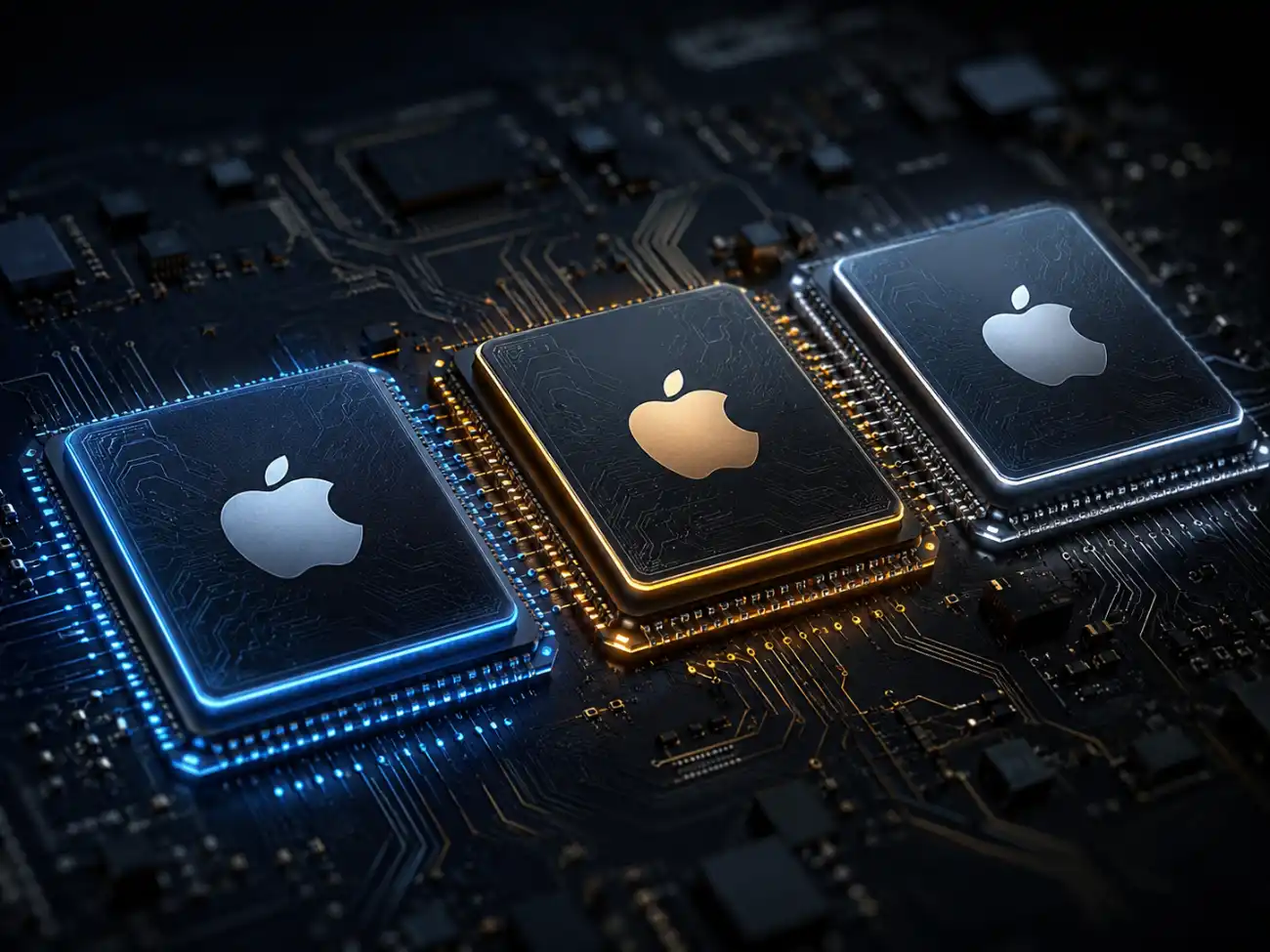
With the Apple M6, M7, and M8 chips reportedly in development, Apple appears to be shifting its Apple Silicon roadmap toward AI-focused computing instead of relying only on traditional performance upgrades. Instead of following its familiar release pattern, the company is expected to place artificial intelligence (AI) at the center of its next-generation processors, signaling a broader shift in how future Macs and Apple devices will be designed. While Apple has not officially confirmed the roadmap, multiple reports indicate that the M6, M7, and M8 chip generations are being developed with AI as a primary focus rather than just traditional CPU and GPU performance.
Apple Is Reportedly Changing Its Chip Strategy
For years, Apple introduced each M-series generation with multiple versions, including the standard, Pro, Max, and eventually Ultra variants. However, recent reports suggest that Apple could break this pattern by releasing only a standard M6 chip while delaying the higher-end Pro and Max models in favor of an AI-focused M7 lineup.
If the reports prove accurate, this would mark the first major restructuring of Apple’s Mac processor roadmap since the transition from Intel processors to Apple Silicon. Rather than chasing annual performance improvements alone, Apple appears to be prioritizing technologies that better support AI workloads across its ecosystem.
AI Becomes the New Priority
The shift reflects a broader trend across the technology industry. Companies including Microsoft, Google, Nvidia, and Qualcomm have invested heavily in AI hardware, and Apple is under increasing pressure to expand the capabilities of Apple Intelligence while keeping user data processed on-device whenever possible.
Future Apple Silicon chips are expected to place greater emphasis on:
- Faster Neural Engine performance
- Higher memory bandwidth for AI models
- Improved GPU acceleration for machine learning
- Better efficiency for on-device generative AI
- Lower power consumption during AI processing
These improvements would help Macs run AI-powered features more efficiently without relying heavily on cloud-based processing.
Why the M7 Could Be More Important Than the M6
According to industry reports, Apple is accelerating development of the M7 family because it plans to introduce more significant AI improvements in that generation. Instead of spreading upgrades across multiple chip releases, Apple may be concentrating its biggest architectural changes into the M7 lineup.
This strategy could allow Apple to deliver:
- More advanced Apple Intelligence features
- Faster local AI model execution
- Better support for creative applications
- Enhanced performance for developers building AI software
Although these details remain unconfirmed by Apple, analysts believe AI capabilities are becoming a key factor in future Mac purchasing decisions.
The Role of the M8 Generation
Even less is officially known about Apple’s future M8 processors, but reports suggest the company is planning several years ahead with AI-focused silicon development. The long-term roadmap indicates Apple wants each new generation of processors to improve not only raw performance but also dedicated AI capabilities across Macs and other Apple devices.
This aligns with Apple’s broader strategy of designing both hardware and software together, allowing AI features to run efficiently while maintaining the company’s focus on privacy and battery life.
What This Means for Mac Users
For everyday users, the shift may not immediately translate into dramatic speed increases for basic tasks like web browsing or document editing. Instead, future improvements are expected to appear in AI-assisted workflows, including:
- Smarter writing assistance
- Faster photo and video editing
- More capable voice interactions
- Improved code generation tools
- Enhanced productivity features powered by Apple Intelligence
Professional creators and developers could benefit the most as AI becomes integrated into creative and technical applications.
Apple’s AI Future Is Becoming Clearer
Although Apple has yet to officially announce the M6, M7, or M8 chips, the reported roadmap suggests the company is redefining what future Apple Silicon will prioritize. Rather than focusing solely on faster CPUs and GPUs, Apple appears to be building processors designed specifically for the next generation of AI-powered computing.
As competition in artificial intelligence continues to intensify, Apple’s investment in custom silicon could play a crucial role in expanding Apple Intelligence across Macs, iPads, and future products. Until the company formally unveils its next processors, these plans remain based on credible industry reporting rather than official announcements, but they offer a strong indication of where Apple’s hardware strategy is heading.